River of the Month | October, 2026

Kern River

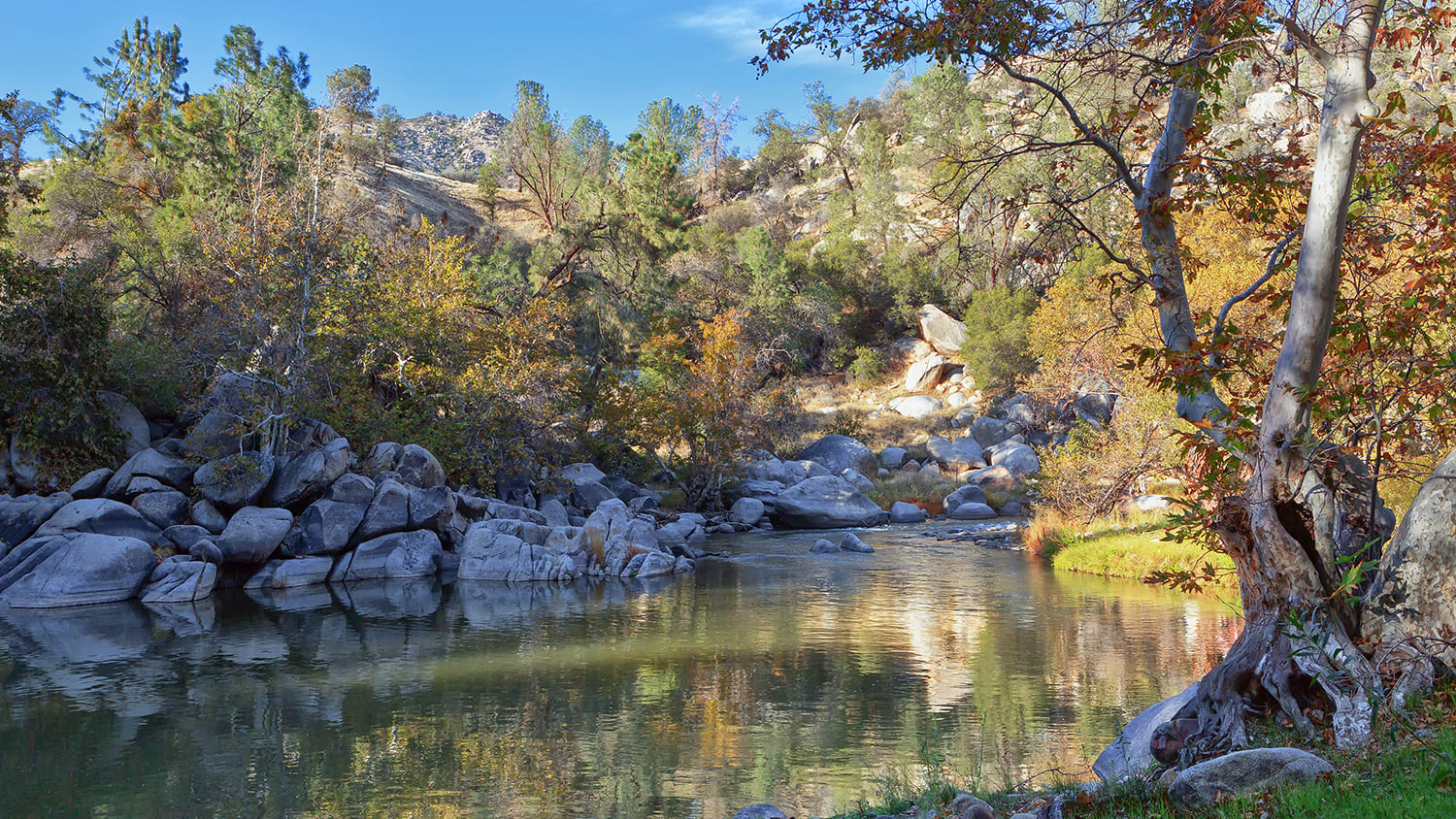
Kern River, CA
Kern River, CA
Photography | Rhonda Martin

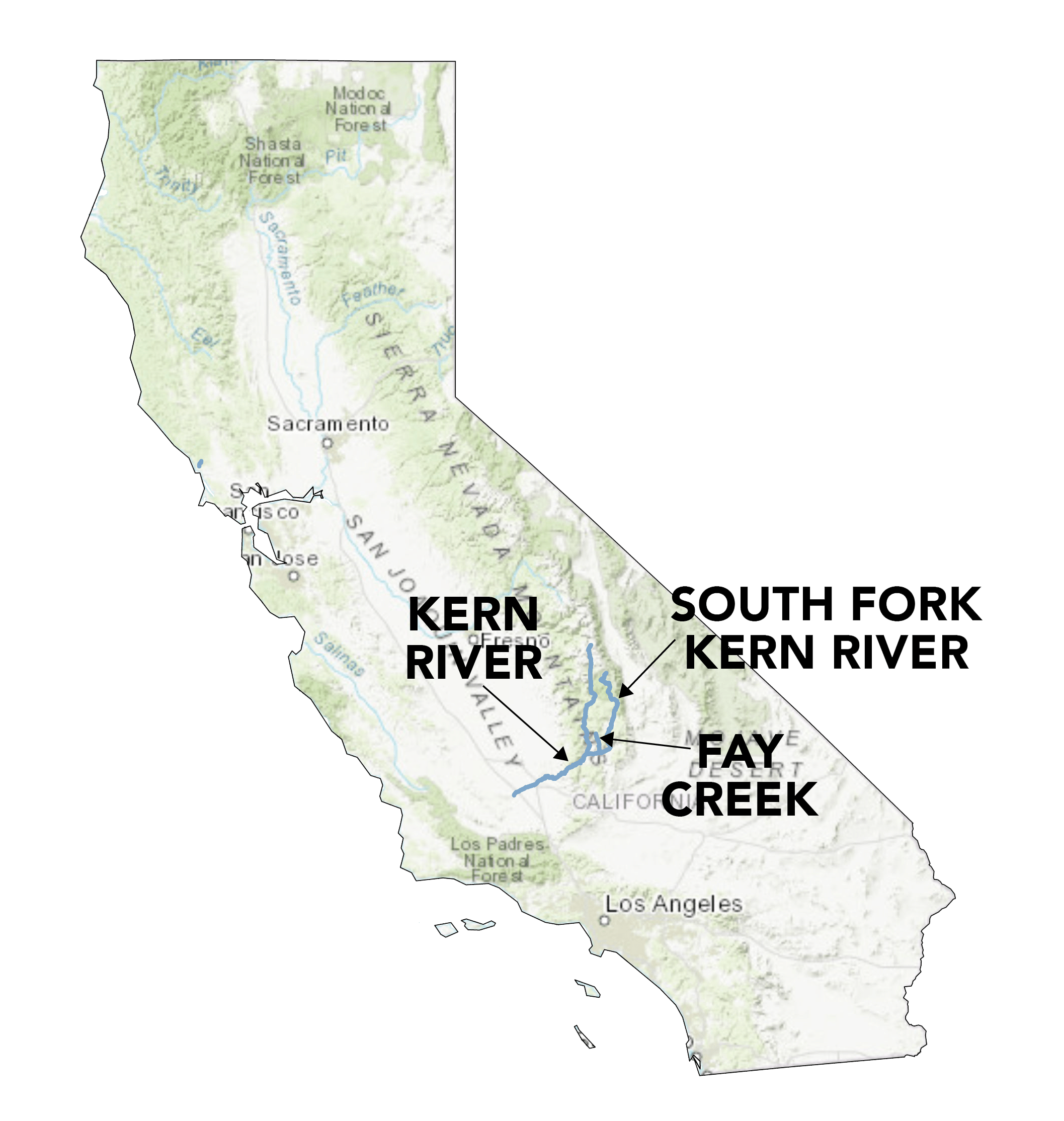
With pristine glacial headwaters, wild and scenic river status, renowned whitewater, diverse plant life, native cold-water fishes and a wistful Merle Haggard song in its honor, California's Kern River is a Golden State treasure through and through. The river begins in a basin of small lakes near Mount Whitney and runs about 165 miles to the southern San Joaquin Valley. It is one of just a few rivers in the state that flows north to south. Its North and South forks pass through the Golden Trout Wilderness and dramatic, boulder-strewn granite canyons that keep the Kern running fast and furious.

Why It Matters

The Kern supports a remarkable diversity of plant and animal life, including three species of trout that you won’t find anywhere else. In 1987, Congress designated 151 miles of the North and South forks as wild and scenic, and the river offers some of the most celebrated whitewater in the West.

The Tübatulabal Tribe have inhabited the Kern River valleys and surrounding areas of the southern Sierra Nevada for millennia. The ancestors of today’s Tübatulabal people were skilled hunters, gatherers and stewards of the land who drew sustenance from the valley’s abundant plants, wildlife and waterways.

The North and South Forks of the Kern lie within a four-hour drive of more than a third of Southern California's population, offering one of the closest places for people to find respite along a wild river.

Fish

With remote headwaters and large stretches of protected land within the Golden Trout Wilderness, Sequoia National Forest, Inyo National Forest and Sequoia National Park, the Kern remains a rare haven for native fish. The basin is home to three endemic trout species: the California golden trout [pictured]—California’s brilliantly colored state fish—the diminutive and federally threatened Little Kern golden trout, and the finely spotted Kern River rainbow trout, which historically grew to as much as eight pounds.

Wildlife

Abundant riparian habitat along the Kern provides important food and shelter for a vast array of birds. The South Fork Kern River Valley is home to Audubon Society's Kern River Preserve, one of the first 10 sites that the organization recognized as a Globally Important Bird Area. More than 330 bird species have been recorded at the preserve, including the threatened western yellow-billed cuckoo, summer tanager [pictured] and endangered southwestern willow flycatcher. Beyond the river corridor, the Kern's canyons and plateaus support black bear, mule deer, California condor and foothill yellow-legged frog.

How to See It

The town of Kernville is a great starting point. For most visitors, the best access to the Kern is along the 20-mile stretch of Mountain Highway 99 from Kernville upstream to the Johnsondale Bridge. The road follows the North Fork closely, and numerous developed sites provide straightforward river access for fishing, birdwatching or simply hanging out in the shade on the banks of the river. In the Sierra Nevada high country, where the two forks of the Kern spring to life, visitors seek out backcountry trout fishing and wilderness hiking in the remote Golden Trout Wilderness. As for boating, the Kern also offers whitewater for nearly every experience level.

A safety note: During peak runoff, the Kern River is notoriously swift and deceptively powerful, earning it the nickname “Killer Kern.” Its dangers inspired Merle Haggard’s song “Kern River,” whose narrator vows never to swim there again after his best friend is swept away and drowned during a moonlit outing.

  • Fish

    Fish

    The Kern is a top-notch freestone stream with great fly fishing. Within the system, you can catch three of the six native trout species listed on California’s Heritage Trout Challenge list. From the Kernville Bridge, Highway 99 follows the river for 20 miles upstream to the Johnsondale Bridge, with abundant road access the entire way up. Above the Johnsondale Bridge, the Wild section of the Wild and Scenic Kern River begins, and you can hike the River Trail upstream for more rugged and challenging fishing. Fall (when river temps are low enough to allow for all-day fishing) and pre-runoff in early spring are ideal times. Most fishing is walk-and-wade. For guides, flies, gear and information, visit the fine folks at the Kern River Fly Shop in Kernville. Check California Department of Fish and Wildlife regulations before you go.

  • Hike

    Hike

    Trails along the Kern are plentiful, ranging from remote wilderness treks to easy day hikes. On the North Fork, the River Trail is one of the most beloved hikes in the region. It follows the river upstream from Johnsondale Bridge for about 5 miles, with canyon scenery and access to fishing. On the South Fork, hikers can access the Pacific Crest Trail starting at Kennedy Meadow Campground and follow the river through piñon-juniper woodlands. A footbridge about two miles in makes for a good turnaround, or hikers can continue on to Clover Meadow.

  • Paddle

    Paddle

    The Kern offers whitewater for nearly every skill level. The North Fork Kern is one of the wildest and steepest whitewater rivers in the U.S., with a gradient of 30 feet per mile. The upper portion ranges in difficulty. At the uppermost reaches, the Forks of the Kern is a remote 17-mile Class V run that begins in the Golden Trout Wilderness, and boaters must carry their gear down a trail to reach the water. Below Johnsondale Bridge, the Upper Kern's roughly 20 road-accessible miles range from the expert-only Class V Thunder Run to Lickety Split, a gentle Class II–III stretch that ends in Kernville and is a good trip for families and beginners. Below Isabella Dam, the Lower Kern offers Class II–IV whitewater. River conditions and hazards on the Kern change quickly and seasonally, so always research current conditions and make sure a stretch is appropriate for your skill level before setting out.

The WRC Story

In 2023, WRC conserved the 2,275-acre Fay Creek Ranch, which sits nearly midway between the North and South forks of the Kern. The sprawling property lies in the transition zone between the High Sierra and the Mojave Desert. A rare refuge in an otherwise arid landscape, the ranch holds abundant water, including several freshwater springs, and 1.5 miles of Fay Creek itself, all of which feed the South Fork Kern. The creek is a crucial perennial cold-water stream for native trout, and its lush banks offer excellent habitat for imperiled birds like southwestern willow flycatcher and least Bell’s vireo, both federally endangered. WRC purchased the ranch and immediately transferred it to two long-term stewards. We conveyed the western half to the Kern River Valley Heritage Foundation, a local land trust, and the eastern half to the Tübatulabal Tribe. These were the first lands ever returned to the Tribe. By conserving Fay Creek Ranch, WRC was able to guarantee permanent protection of the property’s outstanding fish and wildlife habitat, its invaluable cultural sites and excellent public recreation opportunities.

Best Time of Year

Fishing
Fall and early spring
Hiking
March-May and October-November
Paddling
April-September

Go Deeper

  • Sierra White Water Rafting

    (For some of the best Kern River scenery that you’ll find online, check out Adventure Archives’ raft trip with Kern River Outfitters.)
    Learn More
  • Communities Fight to Protect the Kern River

    (In this PBS Earth Focus episode called “Communities Fight to Protect the Kern River,” you’ll meet the folks who work to do just that.)
    Learn More
  • National Wild and Scenic Rivers System: Kern River

    (Plenty of info about the Kern River can be found on the National Wild and Scenic River System website, including designated stretches, outstanding river values and more about what makes the Kern special.)
    Learn More

Stay on top of our work

Choose the news you want to receive, and we’ll keep you abreast of our conservation efforts around the West.